It’s a revolutionary vocal training program that produces immediate and amazing results, allowing a better voice control and greater freedom of expression, teaching to sing in every vocal style (Pop, Rock, Soul, R & B, Jazz, Classic, Music Theatre), keeping the voice flexible, powerful and healthy. Vocal Power Technique includes Pop-mix, “belting”, Vibrato control in different types, male / female falsetto, Chest voice and Male / female voice. Contact me for the two-year students course or for the certification as a teacher, I will provide all the training and exam programs.
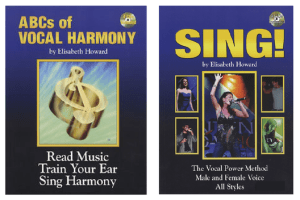
ALSO AT A DISTANCE LEARNING THROUGH THE INTERNET
Personal teaching method for each student using Vocal Power Method, in comparison with Voice Craft, Speech Level Singing, TVC, Distorted Voice Methods and Logopedic Training Exercises in cooperation with prof. Fussi,
Dr. Fuschini and Dr. Rosetti
Musician’s posture, vocal harmonies for musical groups

PACKAGE OF 20 MODERN TECHNICAL SINGING LESSONS
that includes: cyclic breathing, breathing with apnea insertion and rib cage breathing, vocal projection and correct diction. American and Italian vowels and consonants. Microphone technique and posture. Vocal warm-up and de-fatigue. Vocal registers and mechanisms M0-M1-M2-M3 and Whistle Register. The Belt-Mix. The 5 types of vibrato, vocal colors, singing in all styles, the Blues and Pentatonic scale, improvisations.
DICTION/DUBBING IN 15 LESSONS
for teachers, lawyers, speakers.
The package includes: cyclic exhalation, with apnea insertion and rib cage breathing. Italian and American vowels, consonants. Correct diction, è open, é closed, ò open, ó closed, S and Z consonants harsh/voiceless, soft/voiced, the strengthening, numbers, months and days, proper nouns, homonyms, verb tenses. Reading/dubbing tests with correct diction.
ANXIETY MANAGEMENT IN 10 LESSONS
For all categories.
Includes: Anxiety on a psychological level. Management of the same through rib cage breathing.Technical exercises for respiratory control while stationary and in motion. Addressing public oration.
FROM A TO Z HOW TO COMPOSE A SONG
(POWER POINT COURSE IN 32 LESSONS)
For singers, musicians, composers
Includes:
Notions of Theory-bar-tempo-beat and upbeat-joint and disjoint degrees-permanent, momentary alterations, homologous sounds, chromatic/diatonic semitone-intervals and their inversion-the mode-all types of scales(major, natural minor, harmonic, major and minor pentatonic, blues, chromatic, hexatonal)-the keys and the key signature, relative minor and similar minor – syncope, mishap, binding of bearing, value, phrase-values of notes and pauses-recall signs and abbreviations.
Notions of Harmony-chords-relationship between the main degrees of scales and their connection-the other degrees-most commonly used concatenations-chords outside the scale encounter between major and minor-cadences-rules of classical, rock, jazz, light harmony in comparison-the degrees of concatenation of the beginning of the piece -triads maj, min, aug, half-diminished, diminished, seventh chords maj, dominant, min seventh, ninth and passing chords-use and relationship between chords, secondary dominants-harmonization of a melody- accompaniment in song-5te circle-modulation-progressions- ornamentation of a melody-bone of the piece: the essential chords, composition starting from the melodic line or harmony
About the melody
what is a riff, a special, a turn, the gesture-part A-part B(chorus or recorded)-the upbeat chord-the reprise of A-tips and tricks. How the song behaves in various styles(pop, country, R&B, rock…etc.), such as stylistic differences
The literary text
the meter-diphthong, hiatus, triphthong, tonic accent-flat words, sdrucciole, bisdrucciole, truncate, trisdrucciole-the verse(bi-trisyllable, quaternary, quinary, septenary, octenary, novenary, decasyllable, hendecasyllable, dodecasyllable, tetradecasyllable)-elision and syneresis-the rhyme (kissed, alternating, crossed)-the stanza (quatrain, sestina, octave, stanzas of 5.7 lines), second stanza, refrain or chorus’s.
40’s song, modern song
Is the lyrics or music born first?
Types of musical rhythm Being a composer: correlating with text, performer, musician, arranger
One’s Musical Identity: The Secrets to Not Being Banal Composers/Singers
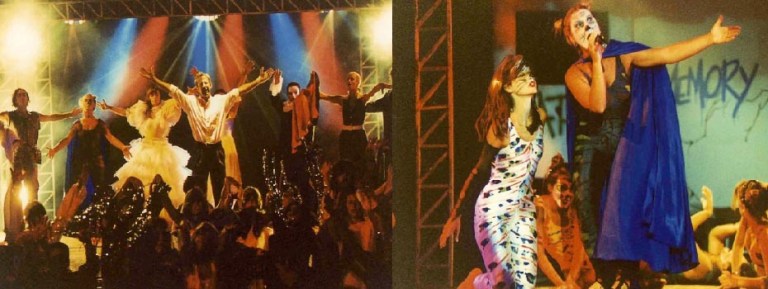
Susy Dal Gesso’s school of Music Theatre, approaches to knowledge of theatre representation, communication, singing with the use of dance and choreography. Lessons give elements of technique and interpretation in any discipline just to face a performance as a whole. Students attending the course should study the four disciplines and be at least eight years old. Lessons comprises vocal technique, chorus singing and individual singing, musical repertoire, history of music, music theory, diction, vocal setting, improvisation, modern dance, hip-hop, recital and a final show realization. The course starts in September and ends in July every year and levels are: basic, intermediate, advanced. Attendance is compulsory.